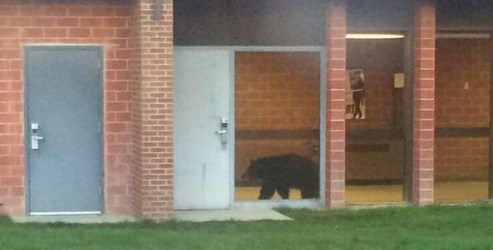
Why live in Montana one might ask? Click to enlarge.
Blogging about life, culture, the economy and politics, i.e., stuff, since December 2012
Wednesday, October 21, 2015
Sunday, October 18, 2015
Market Forces At Work
The federal minimum wage is $7.25 an hour.
In Montana the minimum wage is $8.05 an hour.
We saw this sign outside the Wheat Drive McDonalds the other day.
Businesses throughout town have similar signs up, with starting wages of $10.00 an hour and up.
Inside McDonalds is this recruitment sign.
EUA refers to English Under the Arches, an on-the-clock English instruction program. Get a high school diploma. Learn the language. Free clothes. Subsidized food. Earn your way up. Looks like a stepladder to me. Elect a Democrat. Put an end to the madness.
In Montana the minimum wage is $8.05 an hour.
We saw this sign outside the Wheat Drive McDonalds the other day.
Businesses throughout town have similar signs up, with starting wages of $10.00 an hour and up.
Inside McDonalds is this recruitment sign.
EUA refers to English Under the Arches, an on-the-clock English instruction program. Get a high school diploma. Learn the language. Free clothes. Subsidized food. Earn your way up. Looks like a stepladder to me. Elect a Democrat. Put an end to the madness.
Saturday, October 17, 2015
Saturday Pictures
We took a road trip today, motoring south past Big Sky and West Yellowstone and then through Yellowstone National Park, into Grand Teton National Park, and then across the Tetons to Idaho, returning to Bozeman via Island Park and Ennis. Here are a few things we saw along the way.
Four miles north of West Yellowstone we spied a cow moose and her two maturing calves munching aquatic flora in the Madison River. There are moose in Montana for sure, but they tend to be solitary and are seldom seen. A person actually has a better chance of seeing a bear, so it was a banner day, especially for Teresa who had not previously seen a Montana moose.
In Idaho we saw plowed potato fields and cut hay fields and a cemetery or two. For posterity's sake, here a few photos.
Four miles north of West Yellowstone we spied a cow moose and her two maturing calves munching aquatic flora in the Madison River. There are moose in Montana for sure, but they tend to be solitary and are seldom seen. A person actually has a better chance of seeing a bear, so it was a banner day, especially for Teresa who had not previously seen a Montana moose.
In Idaho we saw plowed potato fields and cut hay fields and a cemetery or two. For posterity's sake, here a few photos.
Wednesday, October 14, 2015
There's a Bear in the B Wing
I dropped my daughter off at Bozeman High School at 7:25 a.m. this morning for a period "0" class. She was joined by an uninvited guest at 7:30 am.
Video by Leon Uebelhoer, foreign exchange student from Germany
Posted by KBZK TV on Wednesday, October 14, 2015
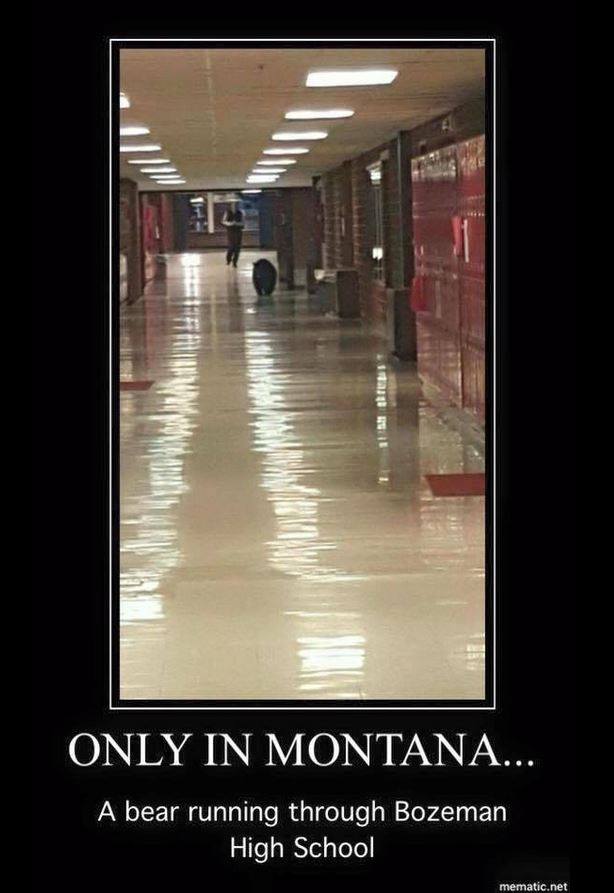
Just for the record, this being Montana, there was no lock down, classes went on as scheduled and the school was not evacuated -- not even an announcement over the PA. We understand that that the school deans and the principal banded together to escort the fellow out of the building where it was last seen crossing 11th Avenue into a homeowner's back yard.
![]() |
| FYI, the man in the background is the principal -- their duties are a bit different in Montana. |
Tuesday, September 15, 2015
George Boznos and Sons: The Founding and Operation of Fabled Par King Skill Golf in Morton Grove, Illinois
When we grew up in Morton Grove Illinois during the late 1950s and through the 1960s, nothing represented the grandeur and the muscular vitality of the city of Chicago more than the Prudential building. Whether we were motoring along Lake Shore Drive or driving down to the Loop via the Northwest Expressway (as the Kennedy was initially known), we would gaze up and see the broad shouldered limestone edifice standing proudly above all.
![]() |
| 1950's view of the Prudential building, Chicago, from the lakefront. |
![]() |
| Broadcast News Magazine, Vol. 112, December, 1961 |
The Prudential has a storied history. For two decades, from 1934 onward, through Depression and War, construction in Chicago had ground to a half. The skyline whose towers had popped up like weeds in the 1920's became frozen in time.
With an easement to build a trestle and breakwater a short distance from shore, the Illinois Central Railroad had controlled Chicago's lakefront since the 1850's.
From the bank of the river southward, the IC had created a massive railyard, dominated by a huge sign for Pabst beer that as it met Michigan Avenue to the east was the most ambitious bit of construction on the site.
The Prudential Building would change all of that, When it was announced in 1951, it became the first structure to be built over Illinois Central air rights, and the opening shot in the revival of major new office construction. It included new viaducts along its perimeter, and a completely new street, the one-block Stetson Avenue, named after Edward Stetson, an I.C. board president. According to a post on the Connecting the Windy City blog, the air rights deed was 85 pages long and identified 500 small, individual pieces of property.
At 42 stories and 601 feet, the Prudential would fall just four feet short of overtaking the Board of Trade as Chicago's tallest building. Designed by Naess and Murphy, it broke ground on August 12, 1952. At nearly 22 million cubic feet, it was the fifth larger building in the city. Each of its 2,617 windows were double-glazed, and designed to allow both sides to be washed from the inside.
The Prudential was a compendium of superlatives. At 1,400 feet-per-minute, it's elevators were the world's fastest, and popping ears became standard elevator car conversation for first-time visitors. The Prudential had the biggest floor-to-floor heights. It's air conditioning capacity -- 3,150 tons -- also set a record. Elevator service stopped at the 40th floor, and the world's tallest escalators carried visitors to the 41st floor and its observatory, which actually bested the one at the Board of Trade to become the tallest in Chicago. The panoramic views from Stouffer's Top of the Rock restaurant immediately made it a destination dining location for tourists and locals alike.
But we in Morton Grove did not need to travel 24 miles southeast to view the modern skyscraper. We had our very own Prudential building in the village on the grounds of the Par King Skill Golf course, where it stood out as a first among equals including scale-model replicas of national monuments like Mount Rushmore and the Statue of Liberty, and more whimsical icons such as the Old Lady Who Lived in a Shoe, The Three Bears and Humpty Dumpty.
Friday, September 11, 2015
Sunday, August 23, 2015
Chick's Book -- An Autobiography By Charles Evans, Jr.
You don't need to travel to the Library of Congress to read it. It is online. It is complete. That is none other than the "Chick Evans Golf Book," immodestly subtitled "The Story of the Sporting Battles of the Greatest of all Amateur Golfers," written by Charles "Chick" Evans Jr., published in 1921. The book was written when Bobby Jones, now universally recognized as the most successful amateur golfer of all time, was still a young man and had yet to win the first of his 13 major championships.
The book confirms things we thought we knew about Chick -- he dearly loved his mom, and he thought the world of caddies and the caddie experience.
Chick paid tribute to his mom in the book's dedication.
He further recognized her prominent role by including her in the "Double Crown" photo of his cherished United States Amateur and United States Open golf trophies.
While more careful copy editing might have been in order (in the photo above, the trophies were said to be won in 1920, while the picture is copyrighted in 1917, the year after Chick won both championships), the book is a remarkable, contemporary insight into the life and times of a golf legend.
The book confirms things we thought we knew about Chick -- he dearly loved his mom, and he thought the world of caddies and the caddie experience.
Chick paid tribute to his mom in the book's dedication.
He further recognized her prominent role by including her in the "Double Crown" photo of his cherished United States Amateur and United States Open golf trophies.
While more careful copy editing might have been in order (in the photo above, the trophies were said to be won in 1920, while the picture is copyrighted in 1917, the year after Chick won both championships), the book is a remarkable, contemporary insight into the life and times of a golf legend.
Saturday, August 15, 2015
Saturday Pictures
Saturday Pictures
August 15, 2015
It's harvest time in Montana. An early spring snow melt meant the wheat fields were planted a bit early this year. The result is a mid-August harvest. We took these pictures of farm machinery reaping the bounty in the field behind our home a few hours before the smoke from the Eustice fire washed out the scene. We are thankful for God's bounty.
| The south section baled and stacked, Gallitan Range in the background, |
| It is a two step process. the combine reaps, threshes and winnows, cutting the stalks and separating the kernels from the leaves and stems. The stalks are left behind in rows for a baler. |
| To the north lies the Bridger Range above the original red barn. |
| To the east is the canyon leading up to Bozeman Pass, featuring "the nose" or "George Washington in repose," depending on who is describing. |
| Here comes the baler. |
| The baler passes several bales from earlier circuits. |
| Disgorging a completed bale. |
| Hay field in the Story Hills, peaking above the barn. |
| Here comes the combine. |
| There goes the combine, leaving a trail of straw behind. The winnowed grain is stored on board and periodically transferred to a waiting truck for transfer to long term storage. |
Friday, August 7, 2015
The Cubes Are Here, The Cubes Are Here
In February we shouted out, "The cubes are coming, the cubes are coming!" Well, they are here!
Cube Square in Huntsville is open for business and fully rented. Our in-laws are hosting an open house this weekend to introduce the cargotechture development, structured from stacked sea shipping containers, to the community.
One of their friends posted this totally cool nighttime view.
Here is the apartment layout.
Way to go Wagamons!
Related post:
The Cubes Are Coming, The Cubes Are Coming -- includes links to news videos and USA Today's feature on the development.
Cube Square in Huntsville is open for business and fully rented. Our in-laws are hosting an open house this weekend to introduce the cargotechture development, structured from stacked sea shipping containers, to the community.
One of their friends posted this totally cool nighttime view.
Here is the apartment layout.
Way to go Wagamons!
Related post:
The Cubes Are Coming, The Cubes Are Coming -- includes links to news videos and USA Today's feature on the development.
Thursday, August 6, 2015
Garden Growth -- Squared
I suppose you could call it a kitchen garden for I pull out radishes, onions, chives, cucumbers, basil, garlic, and others to garnish a main course or perk up salads we prepare in the kitchen. We steamed broccoli straight from the garden last Friday night. One night earlier this week I grilled plank salmon, with chopped bunching onions, pressed garlic and diced basil from the garden spread on top along with lemon and pepper. Yum! The flavor, texture and freshness of our homegrown produce slays anything that can be purchased locally, even from the most chi chi stalls at the farmers markets and roadside stands. I have green peppers and tomatoes growing too; with the late start of the growing season hereabouts the first specimens will be ready for consumption next week.
Our first full summer in Bozeman the vegetable garden consisted of a few tomato plants and several green pepper plants in a flower bed next to the house, so, more than anything, we could test whether we could bring in a worthwhile warm weather crop during the truncated Montana growing season.
We were pleased with the results to the point that last year I forged ahead with constructing a honest to God vegetable garden in the backyard. I did not dig so much as build up the plot.
First, to frame the plot, I interleaved one atop the other, two layers of 6 inch, by 6 inch, by 8 foot landscape timbers around the sunny, grassy area I had selected in the backyard. The border went two timbers long by one timber across, making just about 128 square feet available for planting.
Rather than tilling soil I layered organic material on top of the grass, starting with layers of newsprint to smother the no longer wanted turf. On top of the papers I spread compost we had accumulated from organic kitchen waste (we have three black trash cans we rotate through for this purpose) and from the bottom of a yard waste debris pile. Then on top of that I layered 6 to 8 inches of grass clippings graciously supplied by a neighbor who bags his grass in the spring and de-thatches his sod. Then I watered the layers down giving them an opportunity to compact a bit.
To transplant seedlings (e.g., tomato and pepper plants started indoors) I spaded small holes through the mulch layers and poked through the newspaper. To plant seeds the first year (e.g., broccoli and radishes) I cut away sections of newspaper and bought a few bags of top soil to layer over the seeds (this later step is not needed in subsequent years). Over the summer as much of the mulch decomposed. I supplemented it to keep control weed growth and maintain soil moisture, using grass clippings that commercial lawn crews working our neighborhood were happy to share. This spring I repeated with new layers of compost and clippings. When this process is repeated enough years the timbers will frame a highly fertile raised garden bed.
Also this spring, I doubled down, laying a second set of timbers, and then repeated the full newsprint, compost and grass clipping layering process on this new section. Now the total plot size is about 256 square feet.
We are fortunate to have fertile soil up our end of the Gallitan valley, and by our method of building up the soil it is sure to remain so. I use no fertilizer or chemicals whatsoever on the garden. My methods don't come from a trendy book or emanate from a cause, but are about as natural and organic as you can get.
I dropped two crops from last year's lineup. First stricken was an item canceled for lack of interest. At the family's behest I bought acorn squash seeds, started them indoors, and then transplanted out of doors the three best specimens, resulting in a prolific acorn squash harvest. But the family lost interest after two or three squash were consumed -- the remainder went into compost bins. The second crop scratched was carrots. Our climate, soil and growing conditions are good for root crops, but our backyard rabbits (see one of the little guys above left) chewed down the tops, robbing this root crop of nourishment, and resulting in tiny fingerling carrots. We don't mind sharing with critters, but 90/10 doesn't work for us.
Our two new crops in 2015 are the cucumbers and asparagus. We planted asparagus from seed, the result being a half dozen small bushy plants. The gardening literature cautions there will be no edible crop the first year. In view of how small our plants are we will be pleased and a bit surprised if our maiden plants survive the winter.
While consuming slices of juicy red tomatoes fresh from the garden is something we look forward to, that doesn't need to happen for us to have a successful tomato harvest. Our primary use of garden grown tomatoes is as the basic ingredient for home grown, kitchen made spaghetti sauce. Ingredients include our very own tomatoes, peppers, onions, chives, garlic, and basil. This year we hope to also include the oregano we newly planted.
Last year, I grew long season tomatoes and not a one of them was picking red before our first frost -- actually a hard freeze, indicated by overnight lows of 28 degrees on September 11th and 22 degrees on the 12th (see weather calendar below). But not to worry. Knowing the freeze was coming I bagged and boxed all of the green tomatoes during the daylight hours of September 11. I wrapped the tomatoes in newsprint and stored in boxes in the basement. I pulled out the about half that had ripened in 10 days for making the first batch of spaghetti sauce (we freeze what is not consumed in the first week in meal sized bags) and the other half about 10 days after that, with no more than ten percent of crop going bad along the way.
If there is sufficient demand for new or expanded crops I will gladly add a third section to the plot next spring. I've asked for ideas. Our eldest daughter has already suggested growing potatoes, which is a splendid idea, especially considering that the Gallitan valley is a prime agricultural locale which specializes in growing seed potatoes. If you are driving through just up the road on I-90, the Manhattan Potato Festival is scheduled for August 15. Stop on by and enjoy a spud or two. I think we'll try growing some Yukon Yellows and some Reds of our own next spring.
Our first full summer in Bozeman the vegetable garden consisted of a few tomato plants and several green pepper plants in a flower bed next to the house, so, more than anything, we could test whether we could bring in a worthwhile warm weather crop during the truncated Montana growing season.
| Season 2, single section garden plot, July 8, 2014. |
First, to frame the plot, I interleaved one atop the other, two layers of 6 inch, by 6 inch, by 8 foot landscape timbers around the sunny, grassy area I had selected in the backyard. The border went two timbers long by one timber across, making just about 128 square feet available for planting.
Rather than tilling soil I layered organic material on top of the grass, starting with layers of newsprint to smother the no longer wanted turf. On top of the papers I spread compost we had accumulated from organic kitchen waste (we have three black trash cans we rotate through for this purpose) and from the bottom of a yard waste debris pile. Then on top of that I layered 6 to 8 inches of grass clippings graciously supplied by a neighbor who bags his grass in the spring and de-thatches his sod. Then I watered the layers down giving them an opportunity to compact a bit.
To transplant seedlings (e.g., tomato and pepper plants started indoors) I spaded small holes through the mulch layers and poked through the newspaper. To plant seeds the first year (e.g., broccoli and radishes) I cut away sections of newspaper and bought a few bags of top soil to layer over the seeds (this later step is not needed in subsequent years). Over the summer as much of the mulch decomposed. I supplemented it to keep control weed growth and maintain soil moisture, using grass clippings that commercial lawn crews working our neighborhood were happy to share. This spring I repeated with new layers of compost and clippings. When this process is repeated enough years the timbers will frame a highly fertile raised garden bed.
| Doubled plot, August, 2015 |
We are fortunate to have fertile soil up our end of the Gallitan valley, and by our method of building up the soil it is sure to remain so. I use no fertilizer or chemicals whatsoever on the garden. My methods don't come from a trendy book or emanate from a cause, but are about as natural and organic as you can get.
| 2015 cucumber and tomato crops -- click to enlarge and see a rabbit friend, in the grass, upper left hand corner. |
Our two new crops in 2015 are the cucumbers and asparagus. We planted asparagus from seed, the result being a half dozen small bushy plants. The gardening literature cautions there will be no edible crop the first year. In view of how small our plants are we will be pleased and a bit surprised if our maiden plants survive the winter.
| Simmering home-made spaghetti sauce on top of our Jenn Air range. |
Last year, I grew long season tomatoes and not a one of them was picking red before our first frost -- actually a hard freeze, indicated by overnight lows of 28 degrees on September 11th and 22 degrees on the 12th (see weather calendar below). But not to worry. Knowing the freeze was coming I bagged and boxed all of the green tomatoes during the daylight hours of September 11. I wrapped the tomatoes in newsprint and stored in boxes in the basement. I pulled out the about half that had ripened in 10 days for making the first batch of spaghetti sauce (we freeze what is not consumed in the first week in meal sized bags) and the other half about 10 days after that, with no more than ten percent of crop going bad along the way.
![]() |
| The 2014 weather calendar documents the early hard freeze we had September 11 and 12 last year. We pulled in the crops to avoid damage, and then enjoyed the two weeks of glorious Indian Summer that followed. Source: www.wunderground.com. |
| The lineup for the 2014 Manahattan Potato Festival. |
| Basil left and a couple of red onions, right. |
| Green peppers. |
| Small asparagus plants, center left, a couple of garlic stalks, right. |
| Bunching onions with a few broccoli leaves in the background. |
Saturday, August 1, 2015
Over There
Sometimes it seems you need to go a very long way to come home again. Last month our homeward bound sojourn wound its way through Sweden. Let me explain.
Roland is related by virtue of sharing great grandparents -- Carl (1852 - 1922) and Teolinda StÖdberg (1862 - 1950). My grandfather, Johan StÖdberg (John Stuberg, 1890 - 1951) was one of nine children of Carl and Teolinda born between 1886 and 1904. John followed his elder siblings, Charles and Julia, to Chicago, emigrating to the United States in 1911. He was drafted and served in the US Army as a resident alien during World War I. In 1924 he married my maternal grandmother, Elsa Rydin Stuberg, also a Swedish immigrant. Elsa worked as a domestic and retail clerk. John Stuberg was a bricklayer reputed to be a master fireplace craftsman.
| Carl and Teolinda Stodberg family tree, courtesy of Roland Classon. |
Cousin Roland is in the employ the Helsingbord Daily. Among his journalistic duties for the Helsingburg news outlet is publishing a blog. The topic? Genealogy. Readers of this blog know I research and write at length on family history. But I am a piker by comparison.
Wednesday, July 29, 2015
Saturday Pictures on Wednesday
July 29, 2015
(click to enlarge)
We snapped some photos on our way back to Bozeman from Seattle. I always check out the wind farms; there are a couple east of the Cascades adjacent to I-90. A front was coming through with gusty winds. Blades were twirling this time.
Pasture and an out building.
Abandoned railroad trestle crossing I-90.
When we got near Deer Lodge, Montana, we looked up and sure enough there was fresh fallen snow atop the highest peak -- a sight not usually seen before September.
Fresh snowfall appeared above Anaconda as well.
And fresh white snow was across the mountain tops east of Butte.
At dusk the temperature at Homestake pass had already dropped to 44 degrees Fahrenheit, a huge contrast to the 108 degree temperature we encountered in Spokane on the way out. At home that night the low was 38. Happy to be home again.
Subscribe to:
Posts (Atom)