Wednesday, March 16, 2016

Little League Baseball And Caddie Economics

Last summer in a post that features a team photo of myself with the Morton Grove 1966 Little League North Side All Stars I said,
We posted this just short of half-century old nostalgic photo on my personal Facebook page back in 2011. We were reminded of it the last few days when a couple of my childhood friends somehow ferreted it out from among my hundreds of pictures posted, and clicked the Like button. It occurred to me that some among the broader audience of current and former Morton Grove residents who read my blog might find the photo of interest. Now the pictured individuals will have an opportunity to turn up in search engine results.
Sure enough, through the magic up the internet, I heard a couple of weeks back from a pictured teammate, Rich Kengott. Rich shared his copy of the team photo, which includes a contemporaneous caption identifying the players. 


Rich also sent a picture of the back side of the framed photo, which has my father's name and the address of the home I was raised in from 1953 to 1971.


Thanks to Dad for kindly distributing this framed piece of memorabilia to each of the players on the 1966 team.

I can see now the earlier post erroneously identified the fellow holding the crossed bats as Rich Lauson. We know now that was Bob Warren. I will correct it.

Our ties went beyond baseball. Rich and I started caddying together at Glen View Club in September 1964. Each caddie was assigned a number. But that first fall we did not get our own number as we were kind of like late season baseball farm system call ups who had not earned a permanent job. We caddied on our brother's caddie numbers. I recollect my number was 118a and Rich's number was number "a" something or other too, caddying off of his brother Ray's number, if I recollect his older brother's name correctly. 

Bless Rich for keeping the caddie badges which issued with his numbers from six out of our first seven full years. I remember the first year his number was 147 and mine was 145, mine lower probably because my first loop was a few days earlier than his the previous fall. Each year thereafter, my number was one lower than Rich's because whoever had been assigned 146 in year one fell out of the program


My numbers were 145 in 1965, 94 in 1966, 68 in 1967, 39 in 1968, 12 in 1970 and 10 in 1971. Rich's year 1969 badge is missing, but I recall I was something like number 19, which would have made him 20. If memory serves me right I was number 2 caddying weekends while working a factory job in 1972.

Rich kept detailed records on caddie pay. 
Here is some clarification on the caddie pay. 
1966 caddie badge # 95 earned July 5, 3.50 a bag and by Aug 9, 4.75 a bag; 1967 caddie badge #69 earned July 5, 4.75 a bag and Aug 5, 9.50 doubles; 1968 caddie badge #40 earned July 4, 9.50 doubles and July 21 and the rest of the year 10.50 doubles; 1969 caddie badge #13? I think it was in the 20’s, earned July 4, 10.50 doubles all year. 
I stopped recording after 1969. I continued to caddy for a few more years but also found a factory job with my best friend Bob Casey. We worked the next six summers for his neighbor Bob Palka at Detex Corporation in Chicago.
I remember taking the Skokie Swift down to the Howard Street L with Bob Casey to attend a Cubs game in 1967. Bob was kind of baby faced. He wanted to save 50 cents or whatever the fare difference was by paying the youth fare (age 12 and under). The CTA attendant asked what Bob's birthday was. He replied with a month and date late in the year. The attendant asked what year. Bob replied 1953. Bob paid the adult fare.

Here are a couple of pages from Rich's 1966 hard copy caddie record.


The $2.00 entries are for 9-hole loops. Back in the day we earned "winter" pay early and late in the year, which meant $4.00 (instead of $3.50) a bag for 18 holes and $2.00 (instead of $1.75) a bag for nine holes. Five of the nine dates in April were on weekends, two were on Fridays, and two were mid-week. We caddied after school when we could. The Catholic school kids were released earlier than us public school students and could parlay that into better after school earnings. Most of the caddies attended St. Martha's school in Morton Grove or Notre Dame High School in Niles.  

By the end of the golf season Rich was carrying doubles most of the time and was earning $4.75 a bag for 18 holes. Rich's records definitively identify 1966 as the caddie strike year (check this link for the story of that three and one-half hour work stoppage), indicated by the large (from $3.50 to $4.75 or 35 percent) increase in pay. For the year his earnings were $737.10 ($5,394.28 in 2016 dollars), not bad for a 13-year old kid in 1966. Spring, summer and fall of 1966, baseball and caddying, earning and saving money, finishing junior high and getting ready for high school -- it was a very busy and eventful time.

Monday, March 7, 2016

Glen View Club -- Focus on the First Quarter Century Part 2a: The Boy Scout Sculpture

Our post "Glen View Club -- Focus on the First Quarter Century Part I" is among the most frequently viewed here at Along the Gradyent. When published we promised Part 2, having in mind that would be a comprehensive post to complete the reporting on most everything else of interest in the club's first quarter century. A bit later I followed up with "Harms Woods, Glen View Club and the North Shore and Western Railway" which published photos of remnants of the abandoned early 20th century trolley line that ferried members, caddies and employees of the club from Evanston out to Golf, Illinois. 

There is much ground to cover in Part 2 including the fiery destruction of the original clubhouse, the 1921 construction of the new (and current) clubhouse, vignettes on notable early members, stories of the inaugural Western Open and an early US Amateur and US Open held at the club, and reports on major championship winning members and club professionals. 

After amassing a body of research I've decided to proceed with individual chapters -- much in the way that many books were serially published in the late 19th and into the turn of the 20th century.
While American periodicals first syndicated British writers, over time they drew from a growing base of domestic authors. The rise of the periodicals like Harper's and the Atlantic Monthly grew in symbiotic tandem with American literary talent. The magazines nurtured and provided an economic sustainability for writers, while the writers helped grow the periodicals' circulation base. During the late 19th century, those that were considered the best American writers first published their work in serial form and then only later in a completed volume format.[8]

As a piece in Scribner's Monthly explained in 1878, "Now it is the second or third rate novelist who cannot get publication in a magazine, and is obliged to publish in a volume, and it is in the magazine that the best novelist always appears first."[9] Among the American writers that wrote in serial form were Henry James, Harriet Beecher Stowe and Herman Melville. A large part of the appeal for writers at the time was the broad audiences that serialization could reach, which would then grow their following for published works.

One of the first significant American works to be released in serial format is Uncle Tom's Cabin, by Harriet Beecher Stowe, which was published over a 40-week period by The National Era, an abolitionist periodical, starting with the June 5, 1851 issue.
I am not in league those writers but we have some interesting content to share -- so on with our Part 2a.

THE SCULPTOR

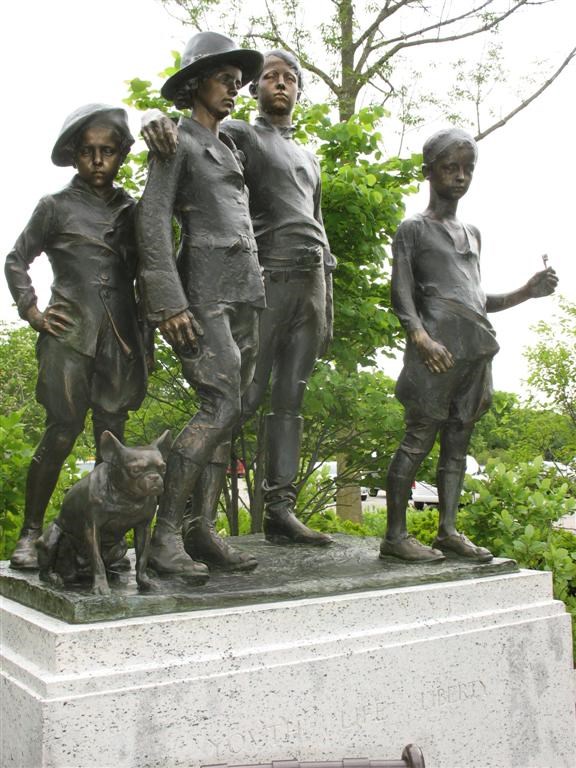
On July 4, 1919 Glen View Club welcomed to its grounds a notable piece of American art -- a rendering known as the Boy Scout sculpture (or fountain) by Andrew O'Connor Jr. (1874-1941). The statute was inserted and is located to this day in a sylvan setting between the clubhouse and the golf course pro shop. The sculptor, Mr. O'Connor, had been: 
Sculptor Andrew O'Connor
[b]orn in Worcester, Massachusetts, son of a sculptor of the same name of Irish descent. In London c.1894-8, met John Singer Sargent and assisted him on reliefs for the Boston Library decorations. On return to America, was commissioned through the sculptor Daniel Chester French to make bronze doors for St Bartholomew's church in New York. Settling in Paris in the early years of the 20th century, he exhibited annually at the Paris Salon where his work was influenced to some extent by Dalou and Rodin, then from 1914 to the mid 1920s in the USA, at Paxton, Massachusetts. First one-man exhibition at the Kunstsalon Walther Zimmermann, Munich, 1906. Received various commissions for funerary and public monuments mainly in the USA, including the monument to Lincoln at Springfield, Illinois, an equestrian statue of Lafayette at Baltimore and the Theodore Roosevelt memorial at Glen View, Chicago.

THE BENEFACTOR

The Boy Scout sculpture was commissioned and donated to Glen View Club by member Edwin S. Jackman (1865-1927). The artwork memorializes president Theodore Roosevelt (1858-1919) by honoring the late president's association with and contributions to the Boy Scout movement. 


The Boy Scout sculpture (1919) at Glen View Club. Golf, Illinois.

"YOUTH -- LIFE -- LIBERTY" are boldly inscripted thereon.

Thursday, March 3, 2016

Voting to Feather the Nest

Arlington, aka Affluent, Virginia.
Back at my old residence in the People's Republic of Arlington Virginia, home of lobbyists, government contractors and high level (six-figure salary) government officials, the electorate is as self interested as you will find anywhere. Here is how Arlington voted on Super Tuesday. The cynical and self-centered insiders say anyone but Don, anyone but Ted -- and forget about that black dude.

Hillary Clinton  25,561
Bernie Sanders  12,541
Marco Rubio     10,944
John Kasich        4,971
Donald Trump    3,698
Ted Cruz             1,734
Ben Carson          381


Let's keep Arlington number one, in family income that is. Vote Democrat. Elect Hillary!!!


Friday, February 26, 2016

Ditching Michelle Obama Leads to Boom

At Bozeman High School's cafeteria that is. The school system's food service ditched the cardboard for all diet dictated by Michelle (which her kids are not subjected to at elite Sidwell Friends school in Northwest DC) via the federal food lunch program, and is bringing in revenues to make up for the lost subsidy. The Bozeman Chronicle reports:
Food sales are up at the Bozeman School District’s food service, which has struggled financially since the federal government got stricter about healthier foods.
Total revenues last fall semester increased nearly $50,000, compared to the previous fall, Bob Burrows said Thursday.
Michelle Obama's dictates still rule the diet of our decidedly
non-obese middle school and elementary school students.
And that’s with no price increase for the third year in a row, said Burrows, who supervises the school district’s food service and 45 employees. He gave the Bozeman School Board an update this week.
“Traffic is up, revenue is up,” Burrows said. “It’s great.”
Bozeman High’s two cafeterias averaged 1,600 customers a day this fall, compared to 800 to 1,000 the year before, he said.
Last summer the School Board agreed in a rare split vote, 5-3, to let Bozeman High School drop out of the National School Lunch Program, while leaving the elementary and middle schools in it. 
The high school cafeteria was losing customers, which Burrows blamed on the Obama administration’s Healthy Hunger Free Kids Act, which seeks to combat an epidemic of childhood obesity by placing strict limits on fat, salt and calories.
Almost double the customers in the high school's cafeteria? Everyone is happy except the for the proprietors of the local McDonald's, Wendy's and Burger King nearby on Main Street, as many kids are now staying in school to eat nutritious and delicious meals. The Obamas are still meddling in my middle school child's life. They can't leave the White House soon enough.

Sunday, February 21, 2016

What's in a Name?

So Bubba Watson won the Glenn Campbell Los Angeles Open, uh, er, I mean the Northern Trust Open today. Way to go Bubba!

The PGA Tour is finishing a swing that headed down, up and then back down the California coast this last month (with a detour to Arizona), finishing at Riviera Country Club in LaLa land for the Northern Trust Open. The tournament's title and sponsorship are contracted and paid for by the eponymous international financial services company. Northern Trust provides private banking, investment banking and wealth management services. Its customers don't get a free toaster with a new checking account, but many do get access to a catered suite with bar overlooking the eighteenth green.


Andy Williams San Diego Open logo hat.
Times change. So do names. A few weeks back, when I tuned into the Farmers Insurance Open broadcast on the Golf Channel, I thought oh yeah, the Andy Williams San Diego Open. 

Last week the PGA tour's traveling road show moved up the the coast to the AT&T Pebble Beach Pro Am, which once was the Bing Crosby National Pro-Amateur.  

The dropped tournament names harken back to a time when most early season PGA Tour events generated exposure and borrowed cachet by trading on the name, likeness, and talent of well known celebrities. 

Andy Williams was best known for his signature song, Moon River.


Williams jumped on to the sponsorship carousel when Tour events seeking promotional appeal and new revenue streams began taking on names that identified more than place.
The San Diego Open was founded in 1952, but hop-scotched around southern California for its first 16 years, never really finding a home. Williams came aboard in 1968 -- the same year that the tournament moved to Torrey Pines, and the combination of celebrity clout and first-class venue proved to be a real game-changer. The event has remained at Torrey ever since, and become one of the most successful on the PGA Tour – and no doubt that success helped to pave the way for Torrey to be awarded the 2008 U.S. Open, won by Tiger Woods in his memorable 18-hole playoff over Rocco Mediate.

Often there was a pro-am component to the celebrity named tour events. Celebrity pals, as well as accomplished athletes and notable politicians participated. Their star power drew attention and status, drove attendance, and attracted advertising and sponsorship dollars. 


1947 Bing Crosby National Pro Amateur program.
The granddaddy of them all was the Bing Crosby Pro-Amateur held in January/February on three courses on the Monterey Peninsula (in the oft-quoted words of Robert Louis Stevenson,  "the most felicitous meeting of land and sea in existence.").  
Crosby always had the Hollywood A-list stars like Jack Lemon, Dean Martin, Clint EastwoodPaul NewmanJack Nicholson, and recent stars like Bill MurrayGlenn FreyKevin Costner, Steve YoungGeorge LopezTom BradyTony Romo and Carson Daly all make the trip to Pebble beach for the Clambake.
In recent years you can add Justin Timberlake, Alice Cooper, Kenny G, Condoleezza Rice, Ray Romano, Larry The Cable Guy and Wayne Gretzky to that list.

Sunday, February 14, 2016

College Free for All!!

Back in the day when I was a college undergraduate a person could matriculate at an excellent in-state universty throughout most of these United States and pay annual tuition and fees of between a thousand and two thousand dollars a year. In well-managed states like Texas the tuition package was only a few hundred dollars per year. 

Most public university students could earn their tuition and then some by working a summer job. By continuing to work part time during the school year, with a modicum of help from parents or other relatives, many students managed to graduate entirely debt free. In-state students who did borrow had post graduation monthly re-payment schedules that were on the order of a car note or Con Ed bills -- not the condo or house size repayment burdens that many students carry today. Fueled largely by the free and easy availability of debt, the costs of attending college have skyrocketed over the years, much more so in some places than others. 

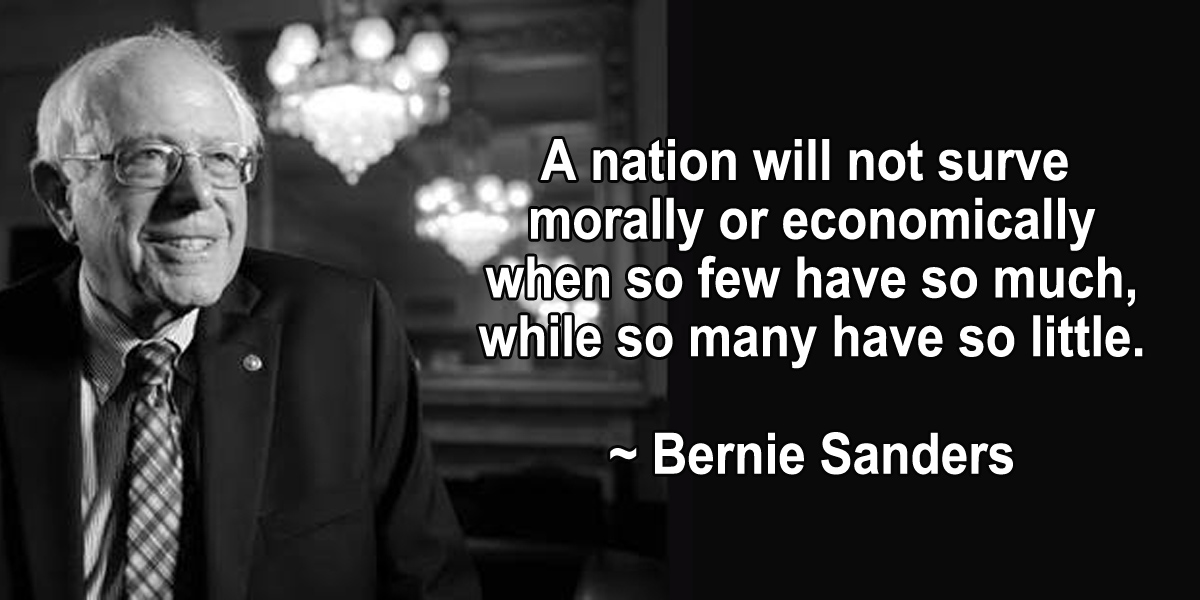
Bernie Sanders' response to this chain of events is to declare college should be free for all. 

Well, let's see how Bernie and his bleeding heart socialist pals from Vermont actually perform on controlling college costs, compared to, let's say, a collection of rugged individualists here in Montana.

According to the university's website, the typical on campus state resident at the University of Vermont has an annual budget of $31,000. That is 4.4 percent percent higher than last year when Bernie Sanders announced his candidacy for President, a timeframe when consumer prices in general have actually declined. Way to go Bernie and friends in Vermont!


2015-2016 Undergraduate Student Financial Aid Budgets

For students enrolled in 12-18 credits per semester.
Vermont Resident,
On Campus
Vermont Resident,
Off Campus
Vermont Resident,
At Home
Out-of-State Resident,
On Campus
Out-of-State Resident,
Off Campus
Tuition$14,664$14,664$14,664$37,056$37,056
Student Fees$2,104**$2,074$2,074$2,104**$2,074
Average Loan Fees$82$82$82$82$82
Books & Supplies$1,200$1,200$1,200$1,200$1,200
Room*$7,376$7,400$2,500$7,376$7,400
Meals*$3,774$2,500$830$3,774$2,500
Transportation$200$646$2,358$672$1,118
Miscellaneous$1,600$1,600$1,906$1,600$1,600
Total$31,000$30,166$25,614$53,864$53,030
Compare the Vermont costs to the costs of attending Montana State University here in Bozeman (University of Montana and Montana Tech costs are similar). 

Estimated Expenses

2015/2016 Montana State University Undergraduate Cost of Attendance


Undergraduate Resident Students

CategorySemesterAcademic Year
Tuition/Fees1$3,425$6,850
Room/Board2$4,325$8,650
Books/Supplies3$625$1,250
Personal/Transportation4
Total$8,375$16,750

Undergraduate Non-Resident Students


CategorySemesterAcademic Year
Tuition/Fees1$11,085$22,170
Room/Board2$4,325$8,650
Books/Supplies3$625$1,250
Personal/Transportation4
Total$16,035$32,070

Note that the non-resident costs at MSU are virtually the same as the in-state resident costs at the University of Vermont. Seeing as the skiing out here is so much better and affordable, it's no wonder you can't walk or drive through MSU's campus without noticing a surprising large number of Vermont license plates. I can imagine the dinner table conversation, "Mom, dad, let me go to Montana it won't cost hardly a penny more." FYI, Montana State makes a small profit on out-of-state tuition.

Given MSU's total annual costs of approximately $17,000 (I added an allowance to the MSU total for transportation/miscellaneous to make the two schools' totals comparable) the in-state cost of attending college in Montana is only slightly more than half the in-state cost of attending the University of Vermont. Over four years the cost premium of Vermont-style socialism adds up to between $55,000 and $60,000 per student.

Bernie papers over the causes of skyrocketing tuition by declaring college education free and proposing to tax financial trades (a tax that won't happen when people wake up and realize it is a tax on their savings plans, annuities, and retirement accounts).   

Should Bernie succeed in making college free we will be able to repurpose money I have earmarked for my three children's college education to join a country club, take a couple of cruises each year, and finance winter stays in Arizona. Sweet! Thanks!

Feel the Bern. Get stuff free. Vote Democrat. Elect Bernie!!!

Wednesday, February 10, 2016

Bridger Creek Golf

Bozeman got some play on the Golf Channel today when Bridger Creek's senior golf instruction program was featured on the Morning Drive program. Launch the video to see some of the background scenery that we are forced to play against in these parts. Eat your hearts out!


Tuesday, February 9, 2016

Feel the Bern! Equality for All!!!

He's winning. I worked nine years as a caddie, toiled as janitor and dishwasher, labored in plastics, cardboard box and culvert factories, and then got my first college degree. After studying hard and graduating Phi Beta Kappa, and working hard for decades thereafter, taking plenty of unpopular positions and bucking trends, I have done better than most people in life. It's unequal -- unfair. Vote Democrat. Elect Bernie!!!


Monday, February 1, 2016

Up the Valley

From time to time at Along the Gradyent we mention places or things that are up the valley. Up the valley it is about three miles to the foot of the Bridger and Gallitan Mountain ranges. Going another mile or two to the end of the road and then literally climbing up the mountain slope lives one of our daughter's high school friends (I will call her Dot), whose home (with stable and pasture) yields incredible views. Sunday I shifted the Jeep into four wheel drive and motored up the snowy and icy switchbacks to drop our daughter off at Dot's for a biology study session. I took the following photos, up the valley. Click to enlarge.


Up the valley looking back down the valley. Gallatin Mountains on the left and Bridger Mountains on the right. 

North to the Gallitan Range.

South to the Bridger Range. Up here you better have your own snow plow (right).

Looking further up the valley to George Washington in repose. You can see this 
rocky outcropping from a distance on our hot air balloon photo (far right). 


 Dot's horse looks kinda like a Pinto.

Dot's other horse looks even more like a Pinto.


Meanwhile, back home at Chez Gradyent the deer came to play (and feed) along a hedge row.


Sunday, January 31, 2016

What a Difference a Year Makes

Last year we played golf in Bozeman on February 5. That's not going to happen in this supremely normal winter of 2015-16.

Web Cam view from the clubhouse, across the putting green to the cottonwoods at the first tee, Cottonwood Hills Golf Course, Bozeman, Montana, January 31, 2016, 5:00 pm MST.


Wednesday, January 27, 2016

It Never Rains in California

Except when it does, of course.

It has been raining. Drought in large portions of California is endangered.

But going by the U.S. government Drought Monitor 100 percent of California remains in drought. Soaking rains and heavy snows, according to the government, have done essentially nothing to attenuate the extent or even the severity of drought.


Compared to the January 12 Monitor (left hand map) only a tiny portion of California is experiencing less severe drought this week (see the extreme northwest corner of the January 19 map on the right). Yet the news on the ground has been nothing but good.

The following graph depicts water storage at Lake Shasta (a good benchmark because it is the largest reservoir in the state) in northern California. The January improvement is dramatic.