Thursday, April 10, 2014

Water Storage Montana Style

We don't get much rain.  We do get plenty of snow, mostly at the higher elevations.
According to the monthly water supply outlook report from the U.S. Department of Agriculture’s Natural Resources Conservation Service in Bozeman, as of April 1, Montana was at 143 percent of normal snowpack and 156 percent of the same time last year. 
Statewide snowpack, at 22.2 inches of snow water equivalent (SWE), was the second-highest in 34 years of recording. In 2011, SWE over the same time was 20.9 inches. 
**** 
Full of purples and dark blues.
Precipitation across the state was the same in March as in February. Only two sub-basins — the Wind River basin in Wyoming leading into the Bighorn River and the West Fork of the Bitterroot River — saw small decreases in snowpack, while the rest of them saw increases. 
“March snowpack accumulation continued the trend February set last month by increasing snowpack an average 13 percent across the watersheds of the state,” the report said. 
The upper and lower Yellowstone River basins were at 157 and 143 percent of normal snowpack and 174 and 168 percent of 2013, respectively. They combined to put the entire Yellowstone basin at 150 percent of normal and 171 percent of 2013. 
In the upper basin, the Red Lodge-Rock Creek basin is the highest it has ever been for SWE, at 203 percent of normal, while the Shields River basin is at 168 percent of normal. 
Streamflow forecasts for the lower basin bumped 20 percent over the last month, to 138 percent of normal. 
In the Bighorn Range in the lower Yellowstone basin, areas have seen 165 to 181 percent of normal March snowfall and SWE totals across the entire lower basin were the third most in 34 years of record keeping. 
The April-July streamflow forecast for the lower Yellowstone basin is 159 percent of average, up 25 percent from March 1. 
In the combined Smith, Judith and Musselshell river basins, snowpack finished the month at 160 percent of normal and 167 percent of last year. 
The Musselshell drainage saw a noticeable jump from last year, up 592 percent, due largely to the fact that it was at just 27 percent of normal at the same time in 2013. 
Streamflow forecasts are also up for the entire basin, at 215 percent of average and 420 percent of last year, assuming average precipitation through July. 
Across the Missouri River basin, March set a new SWE record for April 1 thanks to 173 percent of average snowfall, although it hasn’t topped the total record set in 2011. Overall it is at 160 percent of normal, 168 percent of last year and up 14 percent from last month, the report states. 
The streamflows could be at 148 percent of average, according to the report’s forecast, and 199 percent of last year.
Read more: http://billingsgazette.com/news/state-and-regional/montana/montana-snowpack-through-march-near-levels/article_3894a7f9-61fe-5267-a0a9-f78ad19514b4.html#ixzz2yUQN1vwj

The ample snow packs mean that fishing will be good, groundwater will be replenished, reservoirs will swell to the limit and irrigating will be great -- good for the local agricultural economy, and a shot in the arm nationally when California's output will be down. 

Meanwhile, here in Bozeman we've gotten great snow melt on the east side this last week, so,

Thirteen holes is better than none.

And.

Post by Bridger Creek Golf Course and Academy.
Darn. I predicted April 8. So close and yet so far.

Wednesday, April 9, 2014

Jumping the Fence

Our neighborhood elk herd video has gone viral, with over 1.4 million views on YouTube, which is about 400,000 more than there are people in the entire state of Montana. Too bad we can't count the deer and the elk, or cattle. We'd get a second representative in the House. And heh, you got to love the little one.

The Masters (Repost)

Masters week is here. The golfing world’s attention will be focused on the lush fairways, rolling hills, lightening fast greens and historic layout of Augusta National Golf Course, located just south of the South Carolina, Georgia border. For those not in the know, The Masters is the first of golf’s four majors – the others being the United States Open, The (British) Open Championship and the PGA Championship. The course and tournament are progeny of golf legend Bobby Jones, who nursed them from infancy to become the most renowned course and revered tournament in golf.
     
Augusta National 13th Hole
The Masters is about renewal and rebirth.  It is adorned by flowering spring bulbs, blooming azaleas and dogwoods, stately magnolias framing the the clubhouse lane and towering pines along the fairways. By virtue of its early season position the Masters both creates and limits possibility. Only the winner of The Masters can achieve the most coveted (and never accomplished in modern times) feat in golf – coming home victorious in each of the season’s four majors, the Grand Slam.

The Masters is link between young and old. The Masters is the youngest of the majors but the most revered. For the old of it, Fred Couples looks strong and is hoping for a miracle at age fifty four. Ernie Els is back. And Phil Mickelson shows signs of rounding into form. Zach Johnson is playing well. For the first time this year a father son team, Craig Stadler from the Champions Tour and son Kevin from the PGA tour, are teeing it up. Two time major champion Rory McElroy leads the young contingent and will be joined by other under age twenty five tour winners, Jordan Spieth and Patrick Reid. Many are looking this week to a breakthrough victory by Dustin Johnson. Look for the tournament to be a typical Masters classic not decided until the back nine on Sunday afternoon.

Arnold Palmer, Jack Nicklaus and Gary Player
The Big Three in their Masters Green Jackets
The Masters bestows uniquely among the majors the honor of first teeing off Thursday morning to living legends. This year the honorees are Jack Nicklaus (6 time Masters champion), Arnold Palmer (4 time champion) and Gary Player (3 time Masters champion). They once dominated professional golf as the Big Three. Decades later they are being honored for lifetime achievement and lasting contributions.  They have earned the privilege of driving the first  tee shots into the morning dew.   

Byron Nelson, Gene Sarazen and Sam Snead
For almost two decades the honorary threesome had been Sam Snead (3 time Masters champion), Byron Nelson (2 time Masters champion) and Gene Sarazen (1935 Masters champion), gentlemen who legitimized professional golf in the post Bobby Jones era. Sadly, they are no longer with us, but we still have memories of Snead’s slamming swing, Nelson’s ruthlessly efficient stroke and Sarazen’s elan. Ken Venturi had the honors once.
Jock Hutchison and Fred McLeod
First Honorary Starters
The remaining two members of the exclusive honorary starters club are Jock Hutchison and Fred McLeod, who paired up from 1963 through 1973, which happens to intersect with the nine years I caddied at Glen View Club in Golf, IL.  Why those two?  Neither man won The Masters. But each did win another important tournament at Augusta. Bobby Jones was an organizer of the PGA championship for senior golfers, what today is called the Senior PGA Champrionship. And the first two Senior PGAs were played at Augusta National Golf Club. Hutchison won the first one in 1937, and McCleod won the second one in 1938.  

Jock Hutchison was a member at Glen View. I caddied for him. I did not believe a word the old guy said when he pointed to a club in his bag and said “I won the Open Championship with this mashie niblick laddie.” But thanks to Jock I can say today that I caddied for a successful pro, a one-time honorary starter at the Masters and a British Open and PGA champion. I can say that with confidence because now we have the Internet.


Gary Player, Jack Nicklaus and Arnold Palmer walk across Hogan's bridge on the 12th hole at Augusta National before this year's champions dinner at the Masters.

Tuesday, April 8, 2014

Climate Change to Set World Back 400 Years!

The United States Government and the experts concur -- climate change will be catastrophic, causing "economic and political upheavals 'almost beyond comprehension.'"

Consider these impacts:

  • Millions in India "face starvation."
  • China will face "a major famine every five years."
  • Russia will lose a "major wheat growing area."
Here are specifics.
India will have a major drought every four years and can only support three fourths of her present population.The world reserve would have to supply 30 to 50 million metric tons of grain each year to prevent the death of 150 million Indians. 
China, with a major famine every five years would require a supply of 50 million metric tons of grain. The [Russian Republics] would lose Kazakhstan for grain production, thereby showing a yearly loss of 48 million metric tons of grain. 
Canada, a major exporter, would lose over 50 percent of its production capability and 75 percent of its exporting capabilities. Northern Europe will lose 25 to 30 percent of its present production capability while the Common Market countries would zero their exports.
**** 
The new climate era brings a promise of famine and starvation to many areas of the world.  The economic and political impact of major climate shifts is almost beyond comprehension.
Read it here, in full below.

We are on our way back to the year 1600 baby. The Ottoman Empire, Savoy and Saxony are back. Baroque is in, Ming is out and Louis the XIV reigns.

The Independent Record (Helena, Mont.), May 2, 1976


Monday, April 7, 2014

New Common Core Lesson.

From the blog Real Science.

Learning To Identify Global Warming

During March, 2012 the Eastern US was warm and Alaska was cold. Experts told us that was just what they expected from global warming.
hgtanomaly-usa-201203
This March, the Eastern US was cold and Alaska was less cold than usual, and experts tell us that is just what they expected from global warming.

Saturday, April 5, 2014

Eight Feet Thick Ice

The shipping season is not happening on the Great Lakes.
Aside from ice already floating on the lakes, several factors are hampering crews' efforts to clear the way for commercial ships, including some chunks up to 8-feet thick and stiff winds. Once crews are able to create an open-water path, Read said the wind closes it by pushing the ice together. 
"The commercial shipping season is definitely slowed down, almost to a halt," he said.  
"There is warmer weather coming, so we hope that helps." 
Depending on the ice's thickness, icebreaking ships only can travel at speeds ranging from 3 to 10 knots, which make for long days for its crews, Read said. One ship, the Coast Guard Cutter Mackinaw, now is working to get two commercial ships through the locks toward the end of the week at the earliest.

A view of frozen Lake Michigan from the U.S. Coast Guard Cutter Katmai Bay on Friday.
Here in Bozeman, for the third time this week, Cottonwood Hills golf course has had a morning snow delay. The other seven 18 hole courses in Gallitan County remain snow covered and closed.


Honor? Please!

We are creatures of our experience.

You know, from time to time I hear about honor punishments and killings of women in the Middle East or claims about sharia law. Those references bring back memories of a friend I once had from Pakistan. We worked together at the Postal Service. Let's call my friend Mahmud, because, well, that was his name.   

Mahmud's father was filthy rich. His dad was involved in some sort of export, import business and had multiple homes throughout the world. Mahmud was brilliant. He wanted to prove to his dad that he could make it on his own. Mahmud was urbane, stylish, sophisticated and world traveled. He had a Ph.D in economics from an Ivy League school. Due to family influence, Mahmud's career aspirations were more in business than academics. Mahmud had a gorgeous, intelligent, friendly and sparkling wife, and two of the cutest kids you would ever see.

We worked together in a part of the Postal Service that produced product cost and revenue data, and used, among other things, econometric analysis to analyze the data and produce forecasts. Mahmud and I were reformed minded. We both wanted the Postal Service to scotch its simplistic (and in our view, misleading) unweighted labor productivity metric in favor of an advanced weighted measure. We were determined to produce an alternative productivity model on our own, in our spare time. To help, we wrangled authority to hire a temporary employee -- she was a Vietnamese refugee right off the boat -- to transcribe, organize and, at our direction, crunch reams of data that we had accumulated in hard copy over the years, so we could analyze it and establish baseline multi-factor productivity trends.  

Our refugee hire worked her tail off, so when a suitable vacancy opened we hired her on to a full-time permanent job with benefits. I remember, years later, how proud she was when she tracked me down to brag that her daughter had been admitted to Duke Medical School and thank us for taking her on when she despaired for her future. I said, no need to thank anyone, you earned it.

Anyhow, the partnership with Mahmud was one I enjoyed, where I could offer him insights and understanding of the data we were using, and counsel on how to wind his way through the bureaucracy, the regulatory system and the political climate (in those days, where merit still counted for something, one could actually do all that). And Mahmud could offer me on-the-job, one-on-one graduate school level training in matters statistical and econometric.  While our planned approach proved to be too unwieldy to implement, we were part of a movement that was ultimately successful, and led to the Postal Service adopting a measuring called Total Factor Productivity (which was subject matter of a post last February).

After a few years with the Postal Service, Mahmud was restless and impatient.  He wanted a bigger stage and a more important position, so he moved on first to a consulting firm, and then to a very large corporation headquartered in New Jersey that we all know of, and most of us have been customers of at one time or another. Mahmud was a chief of one sort or another in that company's strategic planning department, came to wear thousand dollar suits, and was known take us out to lunch on his expense account when business beckoned him to Washington, DC.

One peaceful Sunday morning I was at home. The phone rang. "Hi," the caller said "This is Mahmud, how are you doing?"  "Fine," I said and we talked back and forth about work for a few minutes.  Then Mahmud said, "Grady, I wanted to ask you a question because of your legal background." "Ok," I said. Mahmud asked "Is it against the law in the United States to assault your wife?" "It sure is!" I responded.

That was the last time I talked to Mahmud. I heard through the grapevine he resigned his job and left the country. We are all creatures of our experience and this was one of mine.


Friday, April 4, 2014

The Herd Instinct at Work

That would be an elk herd.  This video was shot last week down the road and around the corner, just under a mile from our house. Watch to the end. By the way, for those looking forward to the volcanic explosion, the herd is moving towards Yellowstone.


Thursday, April 3, 2014

On the Road to Bathgate Act 4g: George S. Foster, Chicago Politician, Lawyer, Banker and More

Chicago Eagle, January 20, 1900
What can I say about George S. Foster? 

He led an incredible life. As a teenager he lived in a sod shanty where a snake slithered from the roof down into his cup of tea. As an elderly man he was a gentleman farmer who lived comfortably on the shores of Lake Michigan. Along the way he was a successful lawyer and a zealous advocate for unpopular clients. 

George S. Foster represented a notorious bond thief. He defended ghouls who stole money from the pockets of Iroquois theater fire victims. He helped to save the House of David religious commune from extinction. 

George Foster was a politician. He was intensively involved in Chicago and Cook County Democratic organizations. He served the City of Chicago as alderman, and later lost races for municipal court judge, the Illinois state assembly and the United States Congress. 

George S. Foster helped to find three community banks -- each of which, like most of their peers, failed during the Great Depression. 

There is much to say, so let's get moving. 

Wednesday, April 2, 2014

Free Bus Stops (Or What a Difference a Million Dollars Makes)

Here in Bozeman we are getting new bus shelters with ultra sleek, modern solar panels and LED billboards -- no cost to the tax payer, zero, nada. Fully enclosed on three sides (when they finish installing the panels) and roofed, the bus stops are actually designed to protect riders from frigid winter winds and driving snow. KBZK TV reports:
Waiting for the bus in Bozeman could be getting safer and more comfortable. MTN's Keele Smith shows us what will make that happen.
First bus stop under construction out Huffine Lane. See the
link above to view the video.
Carrie Fabiano knows the routine of waiting for the bus as a regular rider.  
"Well the bus was running a little late and that 10 minutes felt like a lot. I mean I started getting frostbite," she said. 
Fabiano says, "I just think it's a matter of life and death sometimes. I've seen elderly people waiting out in the freezing temperatures and you just worry." 
That is part of the reason why Chandler Communication, out of Kalispell, is building bus shelters. They will be taking care of all the construction and maintenance at no cost to taxpayers.The shelters in Bozeman are unique - they are the first to have solar panels and LED billboards. Only two of these shelters have been built so far. Six more are in the works, including two more on Huffine, three in Bozeman and one in Belgrade.  
Transportation Director with the HRDC, Lee Hazelbaker said, "This is a huge step forward. This has been in the works for years and to finally see it come to fruition is just a great feeling." 
Riders agree.
"Being able to sit down is what's going to be good for me," Fabiano said. "I think it'll help because you can't even tell where some of the bus stops are. It's just a little sign hanging up on the side of the road it's not really a bus stop." 
Another regular bus rider, Amelia Denagy said, "It's going to be a lot more comfortable to ride the bus. It's not going to be such a hassle. It's just going to be a one stop deal, you can take a break, you don't have to freeze or get wet, just much better."
Bozeman weekday bus map.
Contrast this to the bus stops inside the Washington, DC Beltway serving the fiscally spoiled and coddled, profligate citizens of Arlington Virginia who, in the federal spending bubble, have the highest median family incomes nationwide. They are served by million dollar bus stops that don't even protect people from the elements. Their bus stops are financed primarily by the federal government, meaning you the taxpayer, and our children and grandchildren, who are being forced to assume the massive federal debt bomb. The spoiled brats pay not for their own waste. There are few clearer arguments for massive down sizing of federal government.


On the Road to Bathgate, Act 4e: More on Ike Foster's Tenure as Sheriff

Sheriff I. J. Foster
Official Photo
My grandfather, Isaac J. Foster, served two, two-year terms as sheriff of Pembina County, North Dakota, from 1911 to 1915.  Since February, when we wrote at length about Ike's law enforcement career and his other devotions to public service, we've come across additional material on Sheriff Foster's tenure, which we offer here.

Here is a photo portrait of Ike from a Pembina County history book that lists and pictures of Pembina county sheriffs through the its date of publication. I don't know what you think, but the dude looks sheriff tough to me.


Bismarck Tribune, June 28, 1911
The first additional news item is on legal machinations prior the Ernest Stewart murder trial. As may be recalled, the state's attorney ran into serious evidentiary problems during the presentation of the prosecution's case. The defense was not required to proceed. The charges were dropped for the lack of sufficient evidence. The prosecution's inadequate preparation, failure to substantiate a charge of murder, and its late change of heart, is particularly perplexing, now we can see that from the beginning the defense had fully disclosed its theory of the case and litigation strategy.  
BATHGATE, N. D., June 28. -- The line of defense that will be employed by Ernest A. Stewart, former immigration officer at Neche, N. D. and who was arrested yesterday in Winnipeg charged with the murder of Phillip Worrall, was indicated by him in a statement to Sheriff Foster of Pembina county today.  
Stewart declares that the skeleton [of the alleged murder victim] that has been found and identified as that of Worrall is not, as a matter of fact, that of Worrall. Active preparation for this defense was made by Stewart this morning when he employed James Burke, a Bathgate attorney, to represent him. Stewart will make a hard fight for freedom and denies absolutely that he is guilty. In discussing the identity of the skeleton supposed to be that of Worrall, Stewart says the clothes found are not those worn by Worrall when he disappeared.
Whomever planted this news story made sure to mention Stewart had a wife and 16 year old daughter. Stewart's assistant is painted in a sympathetic light as well, another good litigation tactic, for potential jurors read papers. It may be recalled, that "family man" Ernest A. Stewart disclosed, the day after the prosecution dropped the case, he had months previous secretly divorced his faithful and fawning (during the trial) wife.


In North Dakota, wheat is the currency of the realm. That is the medium a conniving farm hand used to rob his employer of what he was due. Albert Gordon (later corrected to Gardiner and then Gardner) gave new meaning to the term "walking around money."

Tuesday, April 1, 2014

March Top Posts

Let it snow, let it snow, let it snow. That's not only a chorus line. It's a description of what happened in March. 
March number 4

On the last day that Cottonwood Hills golf club was open last fall, the pro, Bill Larson, corrected me when I said see you in March. He said no, not March, the snow will clear and we'll be open for a spell come February. Well, here it is April 1. Bill Larson was half right -- not March. Though the course allegedly was open an afternoon when I had a medical appointment, and a few hours another morning before the snow thickened, I still haven't been on the links. Bridger Creek is still snowed under.

March was, however, our best month on Along the Gradyent. The page views piled up and we got some incredible interest on some of our best posts ever. Thanks for the awesome interest readers! Here is March's top ten.

1. Last March's paen to Growing Up in Morton Grove caught on fire, courtesy of a alumni reunion Facebook group that picked it up, and whose members propagated the link on to family and friends. People love reminiscing about idyllic memories from their youth.  We are happy to help.

2. To Invest in a Bank is becoming a perennial top ten. If you buy individual stocks, then for diversification, your portfolio should include one or more firms in the banking or financial services sector. This post describes the decision making process I used to click the buy button on Glacier Bancorp in 2009, when there were still plenty of doubts on which banks would and would not make it. I doubled down in 2010 when the stock price was slow to take off. It's gratifying that readers are finding this case study of use.

3. King Day Post links to last year's King Day story on us caddies going on strike, taking over the driving range and singing "We Shall Overcome."  It's a classic.  If you haven't read it before, you won't be disappointed if you click through to it now.

Glen View Club driving range (center). Us caddies occupied the three target practice greens during our wildcat strike.

4. This a long title but a fantastic life story, On the Road to Bathgate Act 4f: Lyndon R. Foster -- Veteran, Publisher and Politician. Though I never met uncle Lyn, I wish that I had. He was a colorful and combative character. His career was explosive -- literally as you soon shall see when you click through to read.

The "Goal"
5. Forty One Years Ago Today starts out as an uplifting hockey story about attending the best game I ever saw -- at an NCAA Frozen Four. It ends up as a planes, trains, buses and automobile saga when we are marooned by a car wreck on the return trip in a Pennsylvania blizzard.

6. The Golf Channel: Spouse's Guide to Sanity (Special Post), our all time leader, is making a comeback now that the new golf season is gearing up for the Master's. This wife written ready reference schools the uninitiated just enough to be tolerant, and appreciative of the wackier aspects of golf.


Manhattan, Montana -- 86 years ago.
7. Eight Six Years Later, Doctored Photo? The global warmist ghouls blame every bad event these days on recent hundredths of a percent carbon dioxide influxes. So this eighty-six year old photo must have been doctored. What do you think?

8. Please stay off steep slopes! More Avalanche recounted the latest tragic story of a kid visiting from Minnesota, during an avalanche season that took far too many souls, far too young.


Aerial view of January 1 avalanche site.
9. Beware The Avalanche collects expert advice on avalanche avoidance and preparation and tells the gut wrenching story of the father of one of my kid's classmates, who was buried and killed in an avalanche up by Big Sky on New Year's day. May God rest Kenneth Gibson's soul.

10. On the Road to Bathgate Act 1: "Fargo" the Movie opened our Road to Bathgate series last year with a pop -- a pop culture twist that is. For want of snow cover in Minnesota, or Fargo, North Dakota for that matter, the winter the movie was shot, the Coen brothers trekked up to my dad's hometown of Bathgate, North Dakota to shoot the iconic, Paul Bunyan statue scene. Fargo, the series, is coming to FX later this month.


Paul Bunyan woodcut statue, Bathgate, North Dakota.


Monday, March 31, 2014

Chi Chi Is Right

Chi Chi Rodriquez celebrates
making a putt.
Juan ("Chi Chi") Rodriquez, 78 years old and 30-time winner on the PGA and Champions tours, grew up dirt poor in Puerto Rico. He began working as an apprentice forecaddie at 7 making ten cents a day, and moved up to full caddie at age 9. That gives Chi Chi a big leg up on me. By the time I started finding and hawking golf balls, for a nickel, a dime or a quarter, through the chain link fence at the local muni, I was all of 8 years old, and I began caddying across the street at the country club when I was the advanced age of ten. The $3.50 fee for an 18 hole loop seemed a fortune by comparison.  

Most of the important things Chi Chi and I learned in life we didn't learn in school. In Chi Chi's case, that was guaranteed, because he was a high school dropout. I my case, I leveraged my caddie years to go on and get a couple of fancy degrees at fancy universities, and later completed business programs at three prestigious schools, but those experiences were nothing compared to working nine years as a caddie, laboring as a janitor and a dishwasher, toiling in cardboard box and plastic factories, and manufacturing culverts -- all before I finished college.

Here is what Chi Chi says:
Negativism is the sister of failure. I you're negative, you fail. America has become a negative country. It's because our leaders our lawyers. The leaders should be business people. Lawyers are necessary for different things, of course, but they go to school to learn how to win arguments. America is divided now, probably more than it has been since I first came on tour. GolfWorld, March 31, 2014.

Rodriquez is right and kinder than Shakespeare.


It starts right at the top with the SOB Washington lawyer ensconced in the White House. I would know for I spent more than three decades in the vicinity, wrapped in knots at one time or another to the hilt in substantive, regulatory and political battles with DOL, DOE, OSHA, CBO, OMB, GAO, OPM, FCC, PRC, among others, and continuously beckoned to heed the arbitrary call of the Hill and the White House. 

The fellow at the top is not unique. There are literally tens of thousands of Washington lawyers like the manipulative, lying jerk in the White House. If you are at all wise, you wouldn't want any one of them leading you to an outhouse, much less to our country's destiny. We have become a failing country. Good luck to all.


Opening Day

In a little less than three hours the Chicago Cubs open their season against the Pittsburgh Pirates. Which gives me about two and one-half hours where I can be optimistic and be a Cub fan.


Sunday, March 30, 2014

Saturday Pictures on Sunday

Saturday Pictures on Sunday
March 28, 2014
(click to enlarge)

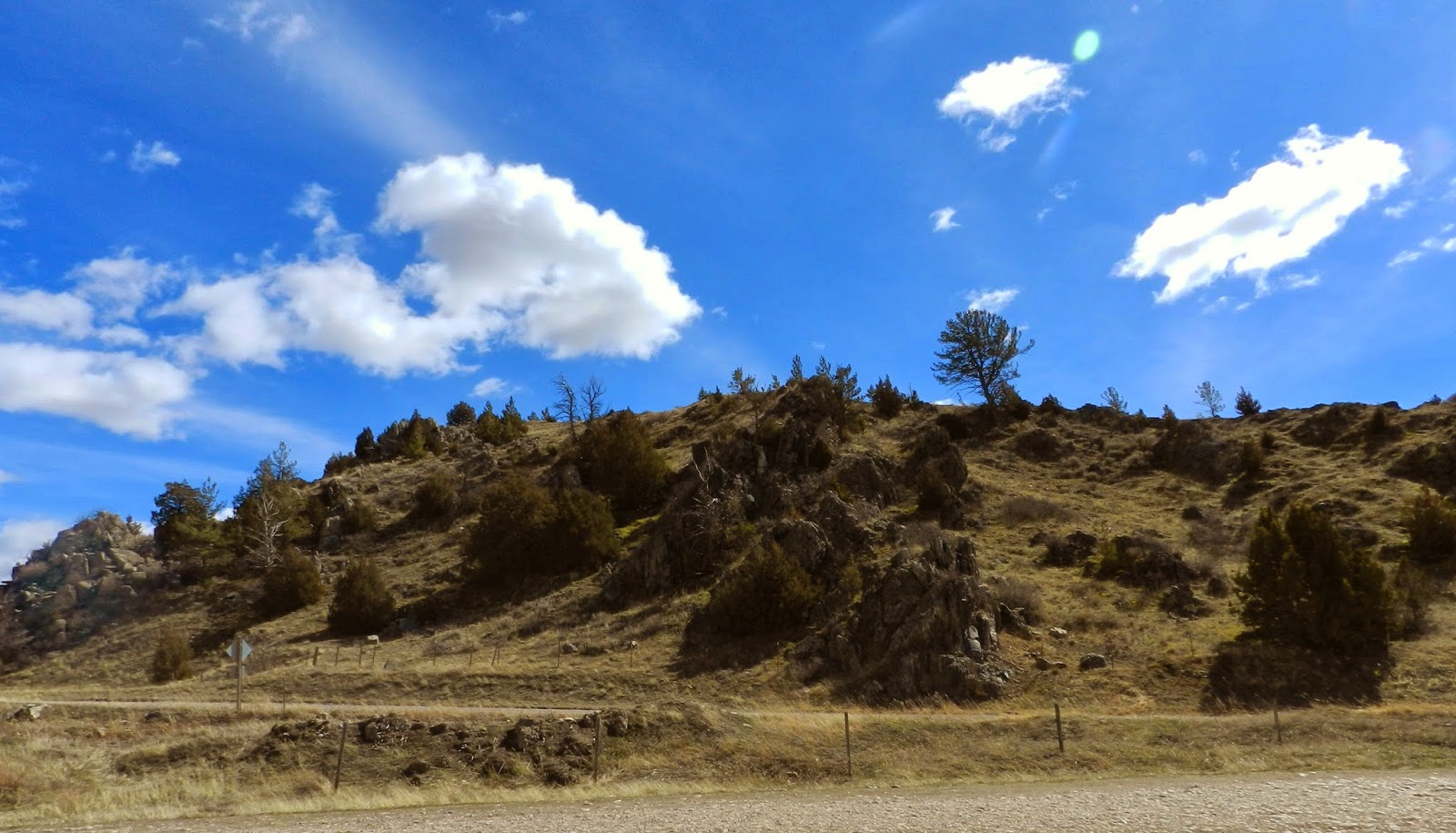
We traveled along Madison Rd. from
Norris Rd., MT 84, up to I-90 accessing
Madison River at multiple points.
Actually, I shot these photos on Friday.  

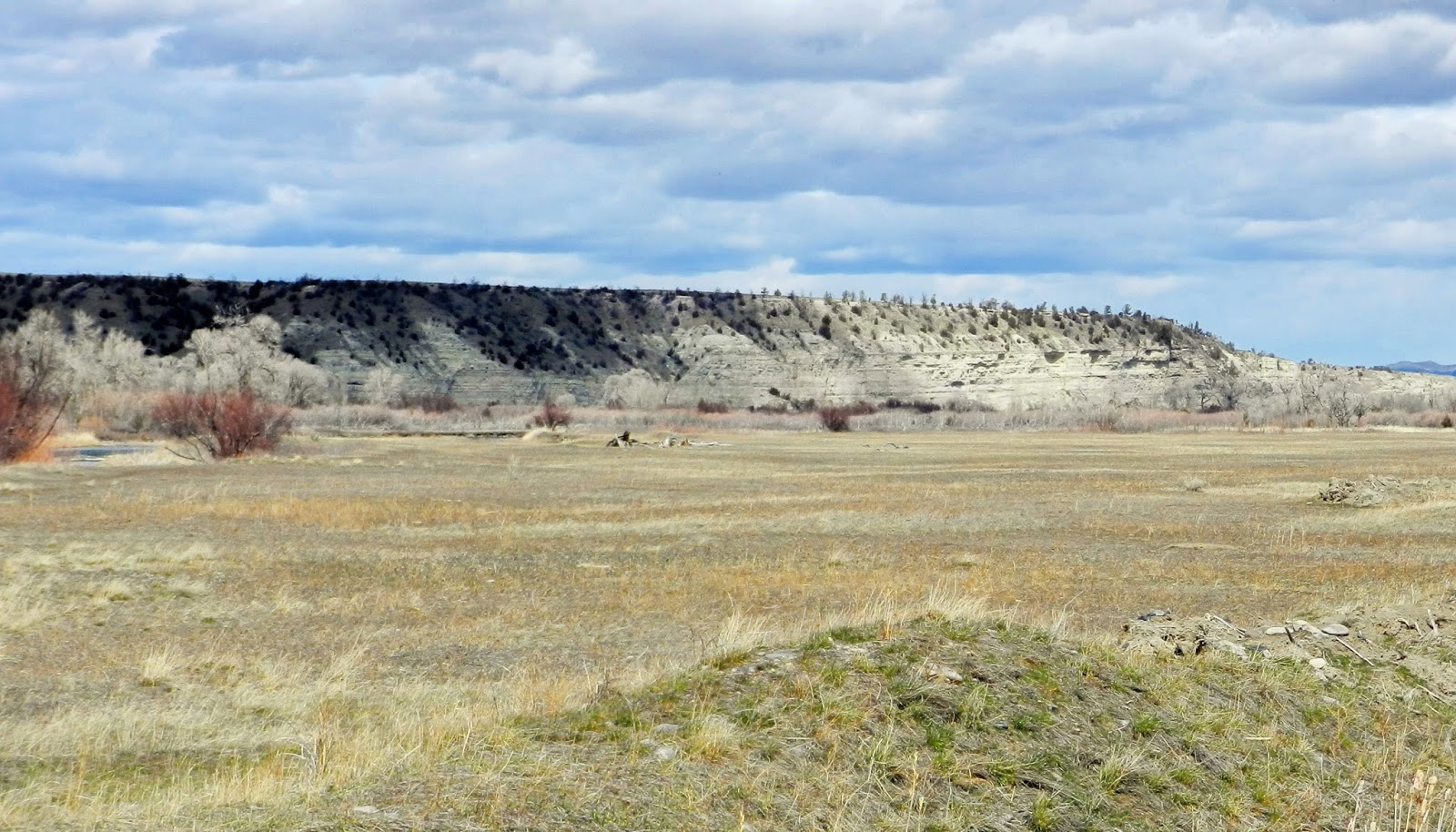
We were tired of the snow, so I went down the valley where the temperatures are (relatively) warmer and the precipitation (relatively) less, where the snow cover is almost entirely gone.  I decided to explore a section of the Madison River, beyond the sign on Madison Road ("Pavement Ends") that would turn most urban dwellers back.

The Madison is reputed as perhaps the best fly fishing stream in an area that is renown for its fly fishing. Just above the stretch I explored, the Madison joins with the Jefferson and Gallitan Rivers, at the aptly named Three Forks, to form the headwaters of the Missouri River. The Madison begins in Yellowstone National Park where the Gibbon and Firehole Rivers join at the aptly named Madison junction. About a hundred miles upstream, the Madison forms Quake Lake, where the river was impounded by the debris of a massive earthquake induced 80 million ton rock slide on August 17, 1959.

The white cliffs reflect the under burden's heavy limestone and gypsum content which, at various times, has supported large cement mining and manufacturing operations in the area. 

Here are Friday's photos! Don't forget to click to enlarge.


Hence the state motto.


Saturday, March 29, 2014

Saturday Pictures

Saturday Pictures
March 29, 2014
(Click to enlarge)

It's been springing here, off and on, all week.  I mean, wait, that other "s" word, snow. Enjoy spring views -- Montana style.